Snowboard Bindings Buying Guide
Hey there, fellow shredders! So you've got your board, maybe even some sweet boots, but what about those crucial connectors that link you to the snow? We're talking about snowboard bindings, and let me tell you, they're way more important than just holding your feet down. The right bindings can totally transform your riding experience, making turns smoother, landings softer, and overall control much better. Get it wrong, and you might find yourself struggling, uncomfortable, or even worse, risking injury. This guide is here to break down everything you need to know about choosing the perfect snowboard bindings for your style, skill level, and budget. Let's dive in!
Understanding Snowboard Binding Types
First things first, let's talk about the main types of snowboard bindings you'll encounter. Each has its own pros and cons, catering to different riders and preferences.
Strap Bindings The Classic Choice
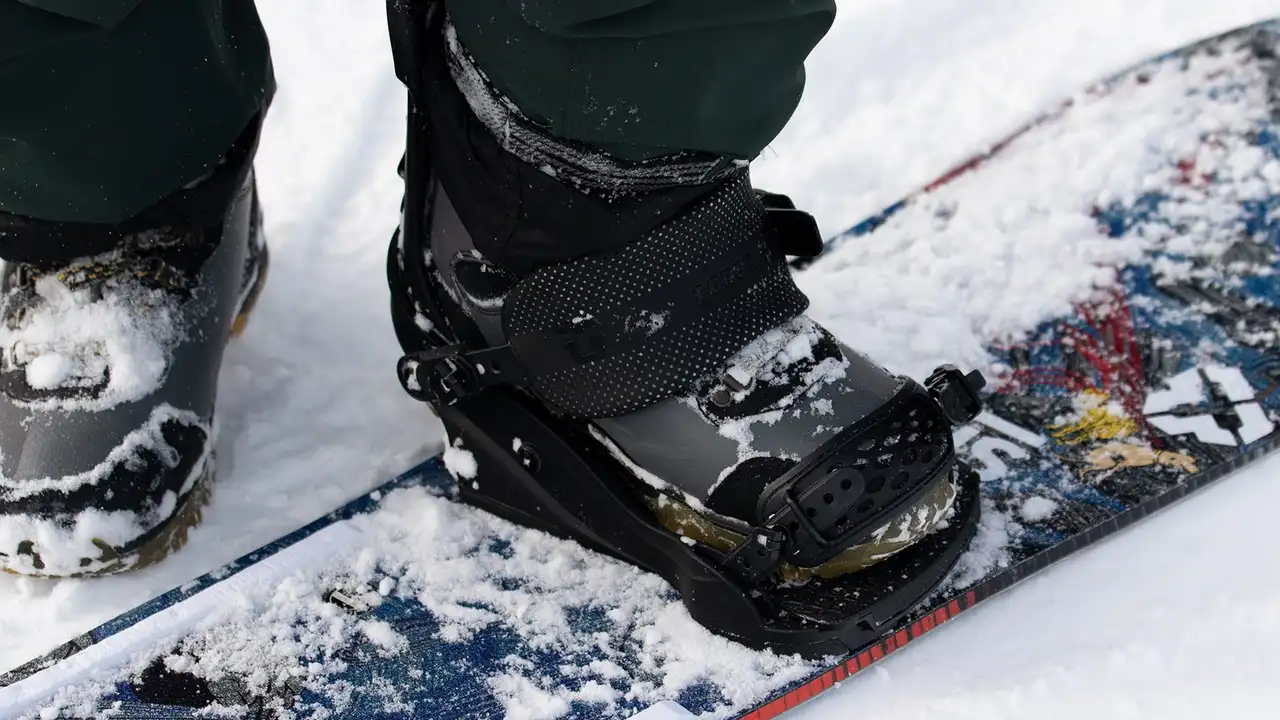
Strap bindings are by far the most common type you'll see on the mountain, and for good reason. They offer excellent control, adjustability, and a secure fit. They typically feature two straps – one over the ankle and one over the toes – that cinch down to hold your boot firmly in place. The highback, the vertical part behind your calf, provides crucial support for heel-side turns.
Pros of Strap Bindings
- Superior Control: The secure fit translates to direct power transfer to your board.
- Adjustability: You can fine-tune the fit for comfort and performance.
- Versatility: Great for all riding styles, from freestyle to freeride.
- Boot Compatibility: Works with almost any snowboard boot.
Cons of Strap Bindings
- Entry/Exit Time: Can be a bit slower to get in and out of, especially in deep snow.
- Snow Buildup: Straps and buckles can sometimes get packed with snow.
Recommended Strap Bindings
Beginner/Intermediate: Burton Custom Bindings
- Description: The Burton Custom is a legendary binding known for its forgiving flex and ease of use. It's a fantastic choice for riders looking to progress without breaking the bank. It features ReFlex mounting for better board flex and a comfortable fit.
- Flex: Soft-Medium
- Riding Style: All-Mountain, Freestyle
- Price Range: $180 - $250 USD
- Why we like it: Super reliable, easy to adjust, and a great value for new and progressing riders.
Intermediate/Advanced: Union Force Bindings
- Description: The Union Force is a workhorse binding, beloved by pros and everyday riders alike for its durability, responsiveness, and all-mountain performance. It's built to last and can handle anything you throw at it.
- Flex: Medium-Stiff
- Riding Style: All-Mountain, Freeride, Freestyle
- Price Range: $250 - $320 USD
- Why we like it: Incredibly durable, responsive, and versatile for aggressive riding.
Rear-Entry Bindings Quick and Convenient
Rear-entry bindings, like those from Flow or Gnu, aim to speed up the process of getting in and out. Instead of unstrapping, the highback folds down, allowing you to slide your foot in from the back. Once your boot is in, you simply flip the highback up and lock it in place. Some models still have a single strap for fine-tuning.
Pros of Rear-Entry Bindings
- Fast Entry/Exit: Significantly quicker than traditional strap bindings.
- Consistent Fit: Once set, the fit remains consistent each time you strap in.
Cons of Rear-Entry Bindings
- Boot Compatibility: Can be a bit finicky with certain boot shapes.
- Snow Buildup: The mechanism can sometimes get jammed with snow or ice.
- Less Adjustability: Generally offer less fine-tuning than strap bindings.
Recommended Rear-Entry Bindings
Flow Fuse Bindings
- Description: The Flow Fuse is a popular choice for riders who want the convenience of rear-entry without sacrificing too much performance. It offers a good balance of responsiveness and comfort.
- Flex: Medium
- Riding Style: All-Mountain, Freestyle
- Price Range: $280 - $350 USD
- Why we like it: Great for quick transitions on the lift and solid all-around performance.
Step-On Bindings The Ultimate Convenience
Step-On bindings, primarily pioneered by Burton, are the latest innovation in binding technology. They completely eliminate straps and highbacks that fold down. Instead, your boots (which must be Step-On compatible) simply click directly into the binding with a few secure connection points. It's incredibly fast and convenient.
Pros of Step-On Bindings
- Unmatched Speed: Get in and out in seconds, no more sitting down.
- Direct Power Transfer: The rigid connection offers excellent control.
- Clean Look: No straps or buckles to deal with.
Cons of Step-On Bindings
- Boot Specific: Requires specific Step-On compatible boots, limiting your boot choice.
- Price: Generally more expensive than traditional bindings and boots.
- Snow Buildup: Can still be affected by ice or snow buildup in the connection points.
Recommended Step-On Bindings
Burton Step On Bindings
- Description: The original and most refined Step On system. These bindings offer incredible convenience and surprisingly good performance. They come in various flex options to match different riding styles.
- Flex: Varies by model (e.g., Step On Re:Flex for softer, Step On X for stiffer)
- Riding Style: All-Mountain, Freestyle, Freeride (depending on model)
- Price Range: $300 - $450 USD (plus compatible boots, which are also premium priced)
- Why we like it: The ultimate in convenience, surprisingly good performance, and constantly improving.
Snowboard Binding Flex Understanding Stiffness
Just like snowboards and boots, bindings have a flex rating, which refers to how stiff or soft they are. This is a super important factor to consider, as it directly impacts how your board responds and how comfortable your ride will be.
Soft Flex Bindings For Playfulness and Forgiveness
Soft flex bindings are more forgiving and allow for easier manipulation of the board. They're great for:
- Beginners: Easier to learn turns and recover from mistakes.
- Freestyle Riders: Ideal for jibbing, buttering, and tweaking grabs, as they allow for more board feel and flexibility.
- Park Riders: Offer more forgiveness on landings and rails.
They absorb vibrations well and provide a more relaxed feel.
Medium Flex Bindings The All-Rounder
Medium flex bindings strike a balance between forgiveness and responsiveness. They're the most versatile option and are suitable for:
- All-Mountain Riders: Great for cruising groomers, hitting the park, and venturing into some powder.
- Intermediate Riders: Offer enough support for progressing skills without being overly demanding.
If you're not sure what you want to specialize in, a medium flex is usually a safe bet.
Stiff Flex Bindings For Power and Precision
Stiff flex bindings offer maximum responsiveness and power transfer. They're designed for:
- Advanced Riders: Who demand precise control at high speeds.
- Freeride/Big Mountain Riders: Provide stability and edge hold in challenging terrain and deep powder.
- Carving Enthusiasts: Allow for aggressive, powerful turns.
They can be less forgiving and require more effort to manipulate the board.
Snowboard Binding Compatibility Ensuring a Perfect Match
This is where things can get a little technical, but don't worry, we'll make it easy. You need to make sure your bindings are compatible with your snowboard's mounting system.
4x4 Insert Pattern The Standard
Most snowboards use a 4x4 insert pattern, which means there are rows of four inserts spaced 4cm apart. Almost all strap and rear-entry bindings come with a disc that can be mounted to this pattern.
2x4 Insert Pattern Common on Newer Boards
Similar to 4x4, but with inserts spaced 2cm apart. Many modern boards, especially freestyle-oriented ones, use this for more stance options. Again, most bindings will come with a disc compatible with both 4x4 and 2x4.
Burton 3D Pattern Older Burton Boards
This is an older Burton-specific pattern with three inserts arranged in a triangle. If you have an older Burton board, you'll need a binding disc specifically designed for 3D. Many modern Burton bindings (and some others) come with a multi-compatible disc.
Burton Channel System The Latest Innovation
Burton's Channel system (also known as EST or The Channel) is a slot running down the center of the board, allowing for infinite stance width and angle adjustments. If you have a Channel board, you'll need bindings that are either EST compatible (Burton's own bindings) or come with a Re:Flex disc that works with both Channel and traditional inserts. Many non-Burton bindings now also offer Channel compatibility.
Pro Tip: Always check the product description for both your board and bindings to ensure compatibility. When in doubt, ask a knowledgeable sales associate!
Key Features and Adjustments in Snowboard Bindings
Beyond type and flex, bindings come with a host of features and adjustments that can fine-tune your ride. Knowing what these do can help you make an informed decision.
Highback Adjustments
- Forward Lean: This adjusts the angle of the highback. More forward lean puts you in a more aggressive, athletic stance, great for carving and responsiveness. Less forward lean is more relaxed and forgiving, good for freestyle.
- Highback Rotation: Some bindings allow you to rotate the highback so it aligns with the heel edge of your board. This can improve power transfer and reduce calf bite.
Strap Adjustments
- Ankle Strap: Look for padded, ergonomically shaped ankle straps that distribute pressure evenly. Tool-less adjustment is a huge plus.
- Toe Strap: Cap straps (which go over the toe of your boot) are generally preferred as they pull your boot back into the heel cup, reducing heel lift.
- Ratchets and Ladders: These are the mechanisms that tighten your straps. Look for smooth, durable ratchets that don't slip.
Baseplate and Footbed
- Baseplate Material: Can be made from various plastics or composites. Stiffer materials offer more responsiveness, while softer ones provide more dampening.
- Canted Footbeds: Many bindings feature canted footbeds, which angle your knees inward to align with your natural stance. This can reduce fatigue and improve power transfer.
- Dampening: Padding under the footbed helps absorb vibrations and impacts, making for a smoother ride and softer landings.
Sizing Your Snowboard Bindings Getting the Right Fit
Binding size is crucial for performance and comfort. Bindings are typically sized in S, M, L, or sometimes XS, S, M, L, XL. This sizing corresponds to a range of boot sizes. You need to make sure your boots fit snugly into the binding's baseplate and that the straps can comfortably secure your boot without excessive overhang or gaps.
General Sizing Guide (always check manufacturer's specific chart):
- Small: Men's US 5-8 / Women's US 6-9
- Medium: Men's US 8-11 / Women's US 9-12
- Large: Men's US 11-14+
Key Sizing Checks:
- Heel Cup Fit: Your boot's heel should sit snugly in the heel cup of the binding.
- Strap Length: Ensure the straps have enough length to comfortably wrap around your boot and that the ratchets engage properly.
- Toe/Heel Overhang: Your boot should not overhang the binding's baseplate excessively on the toe or heel side. A little bit is fine, but too much can cause drag.
Setting Up Your Snowboard Bindings Stance and Angles
Once you've got your bindings, setting them up correctly on your board is the next big step. This involves choosing your stance width and binding angles.
Stance Width Finding Your Sweet Spot
Your stance width is the distance between the center of your bindings. A good starting point is usually shoulder-width apart, but it's highly personal. Experiment to find what feels most comfortable and balanced for you.
- Wider Stance: More stable for landing jumps, good for park riding.
- Narrower Stance: Easier to initiate turns, good for carving and quick edge changes.
Binding Angles Dialing in Your Ride
Binding angles refer to how much your feet are angled relative to the length of the board. Angles are measured in degrees, with 0 degrees being perpendicular to the board.
Common Stance Types
- Duck Stance: Both feet angled outwards (e.g., +15 degrees front, -15 degrees back). This is very common for freestyle and all-mountain riding as it allows for comfortable riding switch (backwards).
- Forward Stance: Both feet angled forward, with the back foot at a smaller angle than the front (e.g., +18 degrees front, +6 degrees back). Good for directional riding, carving, and freeride.
- Alpine Stance: Both feet angled aggressively forward (e.g., +30 degrees front, +25 degrees back). Used for hardboot carving and racing.
Starting Point for Beginners: A slight duck stance, like +15 degrees on the front foot and -6 to -9 degrees on the back foot, is a great starting point for learning to ride both regular and switch.
Pro Tip: Don't be afraid to experiment with your stance width and angles. Small adjustments can make a big difference in how your board feels. Take a screwdriver with you to the mountain and make tweaks throughout the day until you find what works best.
Maintenance and Care for Your Snowboard Bindings
To ensure your bindings last and perform well season after season, a little care goes a long way.
- Check Screws Regularly: Before each ride, quickly check that all mounting screws are tight. Loose screws can lead to poor performance or even a lost binding.
- Clean After Use: Wipe down your bindings after riding, especially if they're wet or muddy. Pay attention to ratchets and buckles to prevent rust and ensure smooth operation.
- Lubricate Moving Parts: Occasionally, a small amount of silicone spray on ratchets and pivots can keep them working smoothly.
- Store Properly: When storing your board for the off-season, loosen the binding straps and store in a cool, dry place.
- Inspect for Wear: Periodically check straps, highbacks, and baseplates for cracks, tears, or excessive wear. Replace worn parts if necessary.
Comparing Specific Binding Models and Their Ideal Use Cases
Let's look at a few more popular binding models and who they're best suited for, giving you a broader perspective on the market.
Salomon District Bindings
- Description: The Salomon District is a freestyle-focused binding known for its flexible highback and comfortable fit. It's designed to allow for maximum tweakability and board feel, making it a favorite among park riders and those who love to butter.
- Flex: Soft-Medium
- Riding Style: Freestyle, Park, Jibbing
- Price Range: $220 - $280 USD
- Ideal User: Riders who spend a lot of time in the park, enjoy creative riding, and want a binding that allows for expressive movements.
Rome Katana Bindings
- Description: The Rome Katana is a high-performance, highly adjustable binding that caters to advanced riders looking for precision and customization. It features a unique 'PivotMount' technology that allows you to adjust the ankle strap position for different levels of leverage.
- Flex: Medium-Stiff
- Riding Style: All-Mountain, Freeride, Aggressive Carving
- Price Range: $350 - $420 USD
- Ideal User: Experienced riders who demand maximum control, responsiveness, and the ability to fine-tune their setup for specific conditions or riding styles.
K2 Line Up Bindings
- Description: The K2 Line Up is a versatile all-mountain binding that offers a comfortable and responsive ride. It's known for its durable construction and solid performance across various terrains, making it a reliable choice for a wide range of riders.
- Flex: Medium
- Riding Style: All-Mountain, Freeride, Freestyle
- Price Range: $200 - $270 USD
- Ideal User: Riders looking for a dependable, do-it-all binding that performs well on groomers, in powder, and in the park without being overly aggressive or too soft.
Nitro Team Bindings
- Description: The Nitro Team binding is a staple in the Nitro lineup, offering a perfect blend of comfort, response, and durability. It's a go-to for many pro riders and is built to withstand heavy use across all types of terrain.
- Flex: Medium-Stiff
- Riding Style: All-Mountain, Freeride, Aggressive Freestyle
- Price Range: $260 - $330 USD
- Ideal User: Riders who push their limits, whether it's charging down steep slopes, hitting big jumps, or just riding hard all day long. It offers the support needed for high-speed control.
Final Thoughts on Choosing Your Snowboard Bindings
Choosing the right snowboard bindings might seem like a lot to take in, but by understanding the different types, flex ratings, compatibility, and key features, you're well on your way to making an informed decision. Remember, the best binding for you is one that matches your riding style, skill level, and works seamlessly with your boots and board.
Don't be afraid to try on different models in a shop, even if it's just to get a feel for them. If possible, bring your boots with you to ensure a perfect fit. And once you've got them, take the time to set them up correctly on your board. A little adjustment can go a long way in improving your comfort and performance on the snow. Happy shredding!
:max_bytes(150000):strip_icc()/277019-baked-pork-chops-with-cream-of-mushroom-soup-DDMFS-beauty-4x3-BG-7505-5762b731cf30447d9cbbbbbf387beafa.jpg)