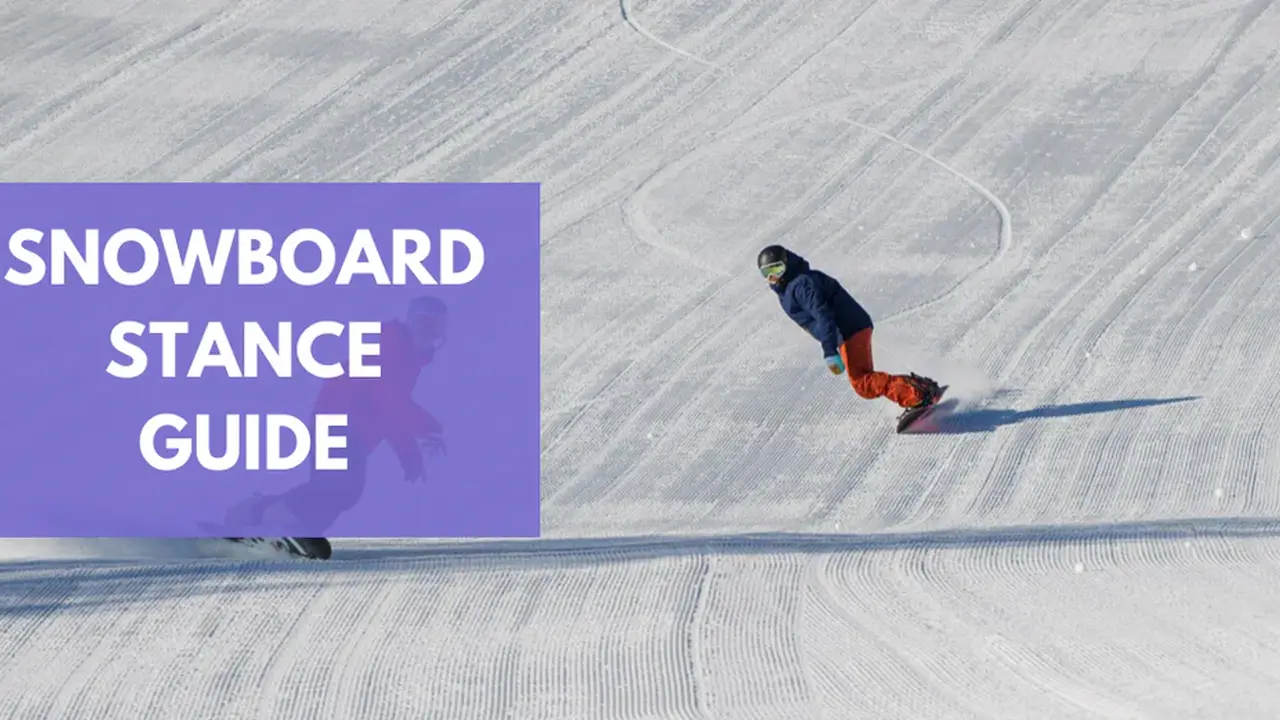
Optimize your snowboard stance for better control and comfort. Learn how to set up your bindings for your riding style.
Snowboard Stance Setup Guide
Alright, so you've got your shiny new snowboard and bindings, maybe even some fresh boots. But before you hit the slopes, there's one crucial step that often gets overlooked, especially by beginners: setting up your snowboard stance. This isn't just about bolting your bindings on; it's about finding that sweet spot that gives you maximum control, comfort, and progression. A well-tuned stance can make a world of difference, turning a frustrating day into an epic one. Let's dive deep into everything you need to know to dial in your perfect snowboard stance.
Understanding Snowboard Stance Basics Angulation and Width
Before we get into the nitty-gritty, let's cover the two main components of your snowboard stance: angulation (or angles) and width. Your binding angles determine how much your feet point towards the nose or tail of the board, while your stance width is the distance between the centers of your bindings. Both play a massive role in how you ride, how comfortable you feel, and how easily you can maneuver your board.
Generally, there are three main types of stances: regular, goofy, and duck. Regular means your left foot is forward, goofy means your right foot is forward. Duck stance is when both feet are angled outwards, away from the center of the board, like a duck's feet. This is super common for freestyle and park riders because it allows for easier switch riding (riding with your non-dominant foot forward).
Finding Your Natural Stance Regular or Goofy
First things first, are you regular or goofy? This is your dominant foot forward. The easiest way to figure this out is to think about what foot you'd naturally lead with if someone gave you a gentle push from behind. The foot you step forward with is usually your lead foot. Another common test is to imagine sliding on a slippery floor; the foot you put forward is likely your dominant one. Don't overthink it; it's usually pretty intuitive.
Setting Your Stance Width The Goldilocks Zone
Your stance width is super important for balance and leverage. Too narrow, and you'll feel unstable. Too wide, and you'll lose leverage and might strain your knees. The general rule of thumb is to start with a width roughly equal to your shoulder width. You can measure this by standing naturally and having a friend measure the distance between the outside of your shoulders. This is a good starting point, but it's not set in stone.
Many snowboards have recommended stance markers, often called 'reference stance' or 'recommended stance,' which are usually indicated by small lines or dots on the board's insert pack. These are a great place to start, especially for beginners. As you progress, you might want to experiment with slightly wider or narrower stances based on your riding style. For instance, park riders often prefer a slightly wider stance for stability on landings, while freeriders might prefer something a bit narrower for quicker edge-to-edge transitions.
Understanding Binding Angles Degrees of Control
Binding angles are measured in degrees, with 0 degrees meaning your foot is perpendicular to the board's edge. Positive angles mean your toes are pointing towards the nose, and negative angles mean your toes are pointing towards the tail. Here are some common angle setups:
- Forward Stance (Positive/Positive): This is where both feet are angled positively towards the nose. For example, +18 degrees on the front foot and +9 degrees on the back foot. This setup is great for carving and directional riding, as it puts you in a powerful position to drive through turns. It's less ideal for riding switch.
- Duck Stance (Positive/Negative): This is the most common setup, especially for all-mountain and freestyle riders. Your front foot is angled positively (e.g., +15 to +21 degrees), and your back foot is angled negatively (e.g., -6 to -12 degrees). This symmetrical setup allows for comfortable riding in both regular and switch directions, making it versatile for park, powder, and groomers.
- Zero/Flat Stance (0/0): Both feet are at 0 degrees. While some beginners might try this, it's generally not recommended as it can be hard on your knees and doesn't offer much leverage for turning.
For beginners, a good starting point for a duck stance is around +15 degrees on the front foot and -6 degrees on the back foot. This provides a good balance of stability and maneuverability. As you gain experience, you can experiment with slightly larger or smaller angles to fine-tune your ride.
Binding Placement Centering Your Boots
Once you've got your width and angles sorted, you need to make sure your boots are centered on the board. This means that when your boots are in the bindings, your toes and heels should overhang the edges of the board equally. Why is this important? If your toes or heels overhang too much, you'll experience 'toe drag' or 'heel drag,' where your boot catches the snow during turns, causing you to lose control or even fall. Most bindings have adjustable heel cups or toe ramps that allow you to slide your boot forward or backward to achieve perfect centering.
Highback Rotation and Forward Lean Fine Tuning
Beyond the basic stance, there are a couple more adjustments on your bindings that can significantly impact your ride: highback rotation and forward lean.
- Highback Rotation: This allows you to rotate your highbacks (the tall part of the binding that supports your calf) so they are parallel with the heel edge of your board. This provides more direct power transfer to your heel edge, improving control and response, especially for carving. Many bindings have a small screw or lever that allows for this adjustment.
- Forward Lean: This refers to how much the highback is angled forward. More forward lean puts you in a more aggressive, athletic stance, which is great for powerful carving and quick turns. Less forward lean is more relaxed and comfortable, often preferred by freestyle riders or those just cruising. Most bindings have a lever or dial to adjust forward lean. Start with minimal forward lean and gradually increase it as you get more comfortable and want more responsiveness.
Testing Your Stance On and Off the Snow
The best way to test your stance is, of course, on the snow. But you can do some preliminary checks at home. Put on your boots and bindings, then stand on your board. Try to mimic a riding position. Does it feel natural? Can you easily bend your knees and ankles? Do your knees track over your toes? If anything feels off, make small adjustments. Remember, even a few degrees or a centimeter can make a difference.
When you get to the mountain, start on easy terrain. Pay attention to how your body feels. Are your knees or ankles aching? Are you struggling to initiate turns? These could be signs that your stance needs tweaking. Don't be afraid to experiment. Bring a small screwdriver with you to the slopes so you can make adjustments on the fly. Many riders will spend a few runs adjusting their stance until it feels just right.
Product Recommendations and Comparisons
While stance setup is universal, the bindings themselves play a huge role in how easily you can adjust and how comfortable your ride is. Here are a few popular binding brands and models known for their adjustability and performance, catering to different riding styles and budgets:
Burton Cartel X EST Bindings
Description: The Burton Cartel X EST is a legendary binding known for its all-mountain versatility and responsive feel. The 'EST' version is specifically designed for Burton's Channel mounting system, offering infinite stance adjustability. It features a medium-stiff flex, making it suitable for aggressive riders who demand precision and power. The Hammockstrap 2.0 ankle strap and Supergrip Capstrap 2.0 toe strap provide excellent hold and comfort.
Use Case: Ideal for advanced to expert riders who spend time carving groomers, hitting side-hits, and venturing into powder. Its responsiveness makes it great for quick edge changes and powerful turns.
Pros: Excellent power transfer, highly adjustable (especially with EST), durable, comfortable straps, good vibration dampening.
Cons: EST version only works with Burton Channel boards, can be a bit stiff for beginners, higher price point.
Estimated Price: $300 - $350 USD
Union Force Bindings
Description: The Union Force is a perennial favorite for a reason. It's a true workhorse, offering a perfect blend of durability, performance, and value. It has a medium flex, making it versatile for all-mountain riding, from park laps to powder runs. The Exoframe 2.0 ankle strap and TS 2.0 Hexgrip toe strap are designed for comfort and secure fit. Union's canted footbeds help align your knees naturally, reducing fatigue.
Use Case: A fantastic choice for intermediate to advanced riders looking for a reliable, do-it-all binding. Great for those who ride a variety of terrain and want a binding that can handle anything.
Pros: Extremely durable, versatile medium flex, comfortable, good value, canted footbeds for ergonomics.
Cons: Not as responsive as stiffer bindings for aggressive carving, some riders might prefer more cushioning.
Estimated Price: $250 - $300 USD
Salomon District Bindings
Description: The Salomon District is a freestyle-focused binding with a softer, more playful flex. It features a unique ShadowFit baseplate, which uses a soft heelcup for a more natural connection to the board, enhancing board feel and flexibility. This makes it excellent for tweaking grabs, pressing, and generally having fun in the park. The highback is asymmetrical for ergonomic fit.
Use Case: Best suited for park riders, jibbers, and those who prioritize a surfy, playful feel. Also a good option for intermediate riders looking to progress their freestyle skills.
Pros: Excellent board feel, playful flex, comfortable, good for freestyle and jibbing, unique ShadowFit technology.
Cons: Less responsive for high-speed carving, not ideal for aggressive freeriding, might not suit heavier riders.
Estimated Price: $220 - $270 USD
Flow NX2-CX Bindings
Description: Flow bindings are known for their rear-entry system, which allows for super-fast strapping in. The NX2-CX is their stiffer, more performance-oriented model, designed for aggressive all-mountain and freeride use. It features a carbon-infused nylon highback and a rockered aluminum baseplate for direct power transfer and minimal contact with the board, enhancing board flex. The Fusion PowerStrap provides a wide, comfortable hold.
Use Case: Ideal for riders who want the convenience of rear-entry without sacrificing performance. Great for freeriders, carvers, and those who ride a lot of varied terrain and want quick transitions.
Pros: Extremely fast entry/exit, very responsive, good power transfer, comfortable Fusion PowerStrap, durable construction.
Cons: Can take some getting used to the rear-entry system, generally heavier than traditional bindings, higher price point.
Estimated Price: $350 - $400 USD
Ride C-6 Bindings
Description: The Ride C-6 is a versatile all-mountain binding with a medium flex, featuring Ride's C-Series Chassis which combines an aluminum heel cup with a composite tray. This design offers a good balance of responsiveness and dampening. It comes with a comfortable two-piece ankle strap and a minimalist toe strap. The canted footbeds provide ergonomic support.
Use Case: A solid choice for intermediate to advanced riders who want a reliable, comfortable binding for all-mountain cruising, occasional park laps, and some powder exploration.
Pros: Good balance of flex and response, comfortable straps, durable construction, canted footbeds, good value.
Cons: Not as specialized for extreme park or aggressive freeride, some riders might prefer a more premium feel.
Estimated Price: $200 - $250 USD
Advanced Stance Considerations Duck vs Forward
Let's talk a bit more about the duck stance versus a more forward-leaning stance. The duck stance (+15/-9, for example) is incredibly popular because it's symmetrical. This means your body is more centered over the board, making it easier to ride switch (with your non-dominant foot forward) and land jumps. It's also generally more comfortable on your knees, as it reduces rotational stress. If you're into freestyle, park, or just want a versatile setup for all-mountain cruising, duck stance is probably your go-to.
A more forward stance (like +21/+9) is often preferred by dedicated carvers or freeriders who rarely ride switch. This setup puts you in a more aggressive, forward-leaning position, allowing you to really drive into your heel and toe edges for powerful, precise turns. It's less forgiving for switch riding and can be harder on your knees if you're not used to it. Think of it like a race car driver's setup – optimized for one direction and maximum performance.
The Importance of Boot Fit and Binding Compatibility
Before you even think about stance, make sure your boots fit perfectly. A well-fitting boot is the foundation of good snowboarding. If your boots are too big, you'll have slop and lose control. Too small, and you'll be in agony. Once you have your boots, ensure your bindings are compatible with them. Most modern bindings are designed to fit a wide range of boot sizes, but it's always good to double-check the size chart for your specific binding model.
Also, consider the binding mounting system. Most boards use a 2x4 or 4x4 insert pattern, which is compatible with most traditional disc bindings. Burton's Channel system requires EST bindings or specific Channel-compatible discs from other brands. Make sure your bindings match your board's mounting system.
Don't Be Afraid to Experiment and Adjust
The biggest takeaway here is that there's no single 'perfect' stance for everyone. Your ideal setup will depend on your body type, riding style, and personal preferences. What works for your friend might not work for you. Start with the recommended guidelines, but don't be afraid to experiment. Make small adjustments, ride a few runs, and see how it feels. Keep a small multi-tool in your pocket so you can tweak your angles or width on the chairlift.
Many experienced riders will even change their stance slightly depending on the conditions. For a deep powder day, you might move your stance back (setback) to help the nose float. For a park day, you might center your stance for better balance on rails and jumps. It's all about finding what feels right for you and your riding goals.
So, take your time, make those adjustments, and get ready to shred with confidence and comfort. Happy riding!
:max_bytes(150000):strip_icc()/277019-baked-pork-chops-with-cream-of-mushroom-soup-DDMFS-beauty-4x3-BG-7505-5762b731cf30447d9cbbbbbf387beafa.jpg)